
This past weekend, members of the Racial Equity Team participated in the Black History Walking Tour by Oregon Black Pioneers to see if we should recommend it to our membership. We encourage you to book a tour to learn more about some of the racial inequities that continue to affect today’s communities and the bravery of Oregon’s Black pioneers – called that because they were the “firsts.” Our friendly guide shared lots of interesting facts while showing us locations of significant historical interest throughout Albina.
Racial Equity Team celebrates AANHPI Month
Asian American and Pacific Islander Heritage Month celebrates the cultural heritage of Americans who are from Asia, Native Hawaiians, and Pacific Islanders. Pacific Islanders come from the geographic regions of Polynesia, Melanesia, and Micronesia. Hawaii, a part of Polynesia, is often identified withhula, which is much more than a dance.
Content Link Block
Content Link Block
On educational equity: Mississippi’s literacy approach is working better than Oregon’s approach
Each year we choose a learning question, and this year we’re focusing on educational equity: “In what ways can philanthropy play a role in supporting educational equity and success in our region?”
The “Mississippi Miracle” refers to the state's dramatic improvement in 4th-grade reading scores and national education rankings, rising from 49th in 2013 to the top 10 in 2026. This podcast shares the details behind the approach and contrasts Mississippi’s results with Oregon’s (the discussion of Oregon starts at about minute 28).
Microlearning from Member Education: AI in schools
Artificial intelligence (AI) is here to stay for the foreseeable future, presenting us with risks and benefits to education and educational equity, which is the center of our ninety-nine girlfriends learning question this year.
This NPR article explains some of the issues and contains a link to the larger report from the Brookings Institute.
A shortened school year imperils student outcomes
It is both intuitive and proven: more instructional time improves learning outcomes. However, recent data shows that Oregon ranks 47th out of 50 states in total hours of time in school during an academic year. Nationally, students average 1,231 hours of school per year. Oregon requires just 900. With Portland Public Schools now planning to cut three more days of instruction to close a budget deficit, the gap grows wider. It's another reason why the work we do in educational equity is so important.
Access these Native American educational resources
At last month’s Discovery Forum, we shared a list of Native American educational resources. It includes books by and about Native Americans for readers of all ages as well as a list of Native American museums in our area. We encourage you to check it out and share with friends and family.
“Who tells the story and from whose perspective the story is told is as important as the story itself—it inspires future paths forward.” Danita Mason-Hogans
Equity in Education: What Oregon can learn from Mississippi
According to a recent opinion piece by Nicholas Kristof, “A low-income fourth grader is almost twice as likely to test proficient at math in Mississippi as in Oregon.” Three states in the deep south (Mississippi, Louisiana, and Alabama) have made impressive gains in math and reading scores along with significant reduction in absenteeism. Learn more about their success in this piece in the New York Times, and if you are concerned about education in our region, join us at the March 11 Discovery Forum.
Social Housing
Although the term does not have a single agreed-upon definition, social housing usually means mixed-income housing that is owned or financed by local governments. Portland City Council passed a resolution urging city policymakers and experts to show how the city could implement social housing. Check out these articles in Street Roots (with the Portland angle), Vox, and the New York Times to learn more.
LEARNING LINK: VANPORT
This month’s learning links connect to both Black History Month and our 2024 focus on the relationship between equity, poverty and social mobility.
In the 1940s, Vanport was the second largest city in Oregon, built to create wartime housing during WWII. Vanport was home to thousands of Black migrants looking for work in the shipbuilding industry. In 1948 it was destroyed by a devastating flood. The history of Vanport is tied up in state and local laws and practices regarding segregation, housing, and race relations.
The NPR show Code Switch, did a short piece on Vanport in 2015. In addition, Oregon Public Broadcasting created an excellent one-hour documentary to share the full story of Vanport.

LEARNING LINK: IDA B. WELLS-BARNETT
In honor of Black History Month, here is a lovely 2.5 minute video on Ida B. Wells-Barnett for whom the former Wilson High School is now named.

2024: HOW ARE EQUITY, POVERTY, AND SOCIAL MOBILITY RELATED, AND HOW CAN OUR PHILANTHROPY SUPPORT POSITIVE CHANGE?
“How are equity, poverty, and social mobility related, and how can our philanthropy support positive change?”
This question will guide our Member Education programming for the year and is something to remember throughout our grant-making. Learn more about our annual learning questions at this link.
LEARNING LINK: INTELLECTUAL HUMILITY
“I am not here to be right. I am here to get it right.” —Brene Brown
As Girlfriends, we always look for new ways to impact our region. But to do that, we must be willing to listen, consider alternate viewpoints, and change our opinions based on new information.
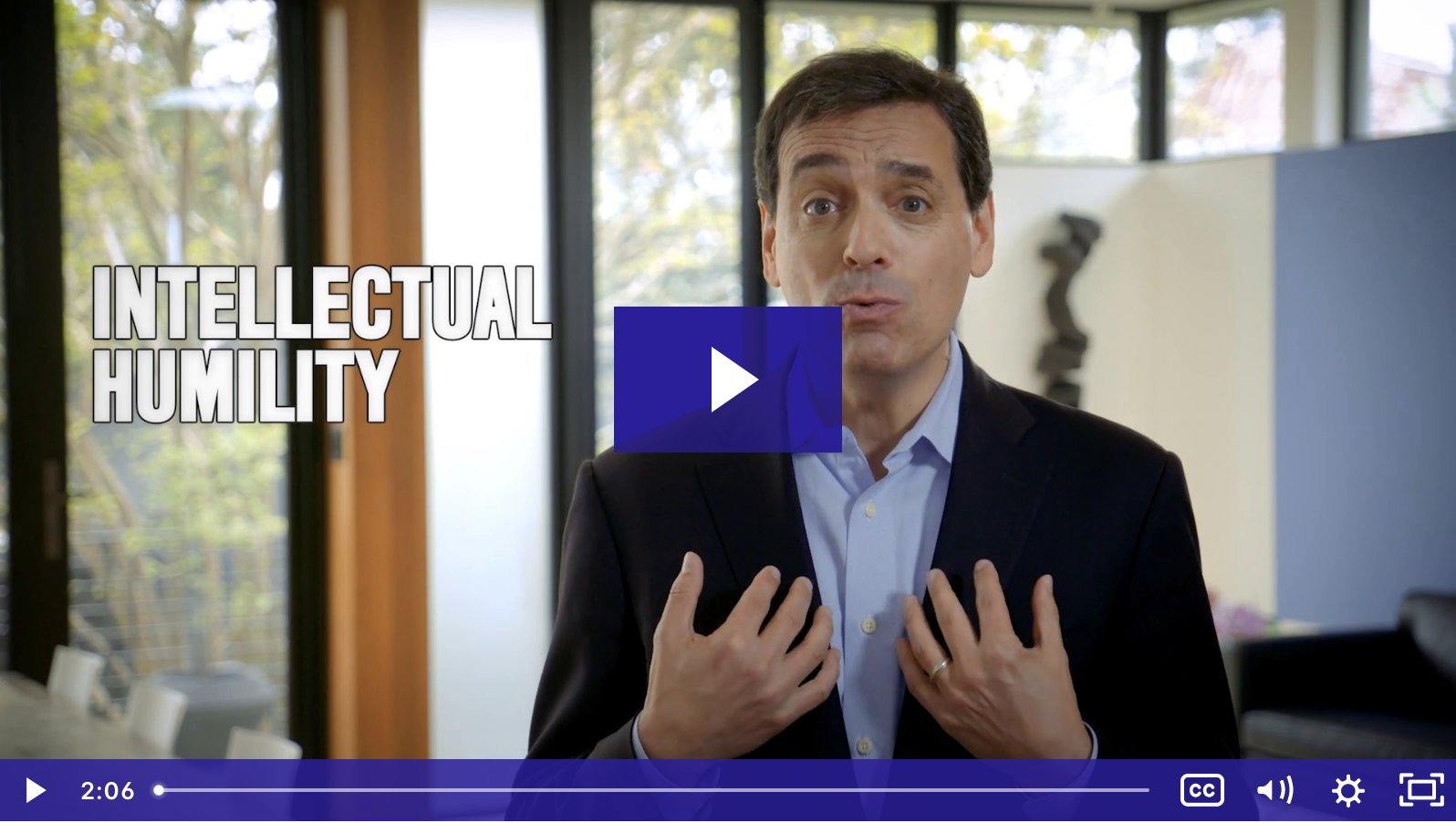
Intellectual humility allows us to open ourselves to new ideas and approaches. In a compelling two-minute video, Dan Pink offers simple approaches to increasing our intellectual humility. For a great story on how to use intellectual humility to improve relationships, listen to this inspiring TedTalk.
LEARNING LINK: GIVENATIVE LIST
As a Wrap-up of Native American Heritage Month, we share this GiveNative List for your consideration.
Native Ways Federation recognizes that Native-led organizations know their communities, their strengths and how best to help their people. Investing in Native-led nonprofits is the best way to support positive change in these communities. Click here to see GiveNative participating organizations.
LEARNING LINK: LAND ACKNOWLEDGMENTS
November is Native American Heritage Month. The National Museum of the American Indian provides wonderful resources to increase your understanding and awareness.
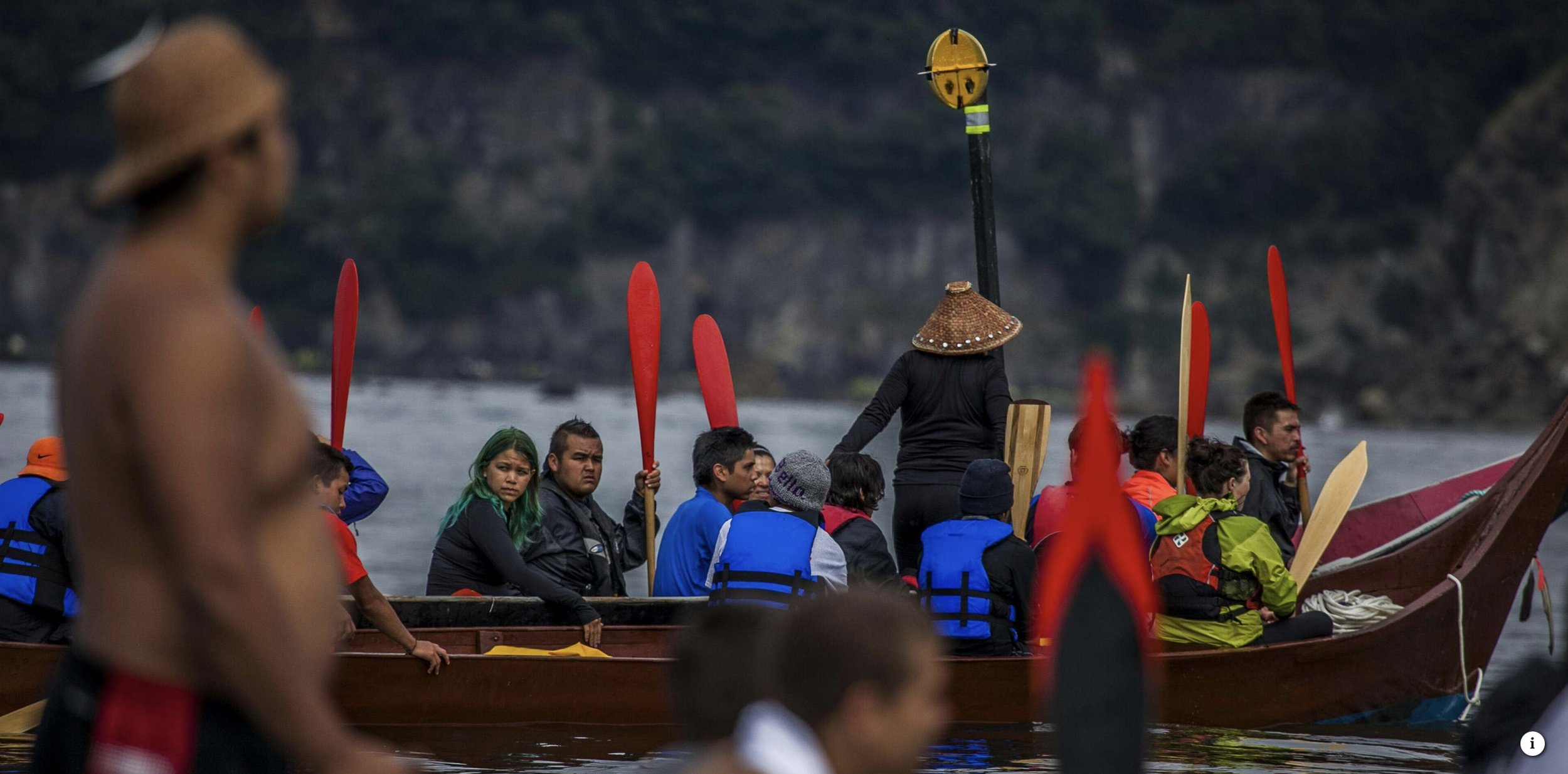
One of the many things we learned via Indian Country 101 is land acknowledgments are a terrific first step in honoring Indigenous peoples who lived on and stewarded the land for generations before us. We also learned that acknowledgments can be a bit performative without involving action in support of Native Peoples and Tribal Nations that are alive and thriving today. At our Awards Celebration, we will share a poem by Rena Priest, member of the Lhaq’temish (Lummi) Nation, and recent Poet Laureate of the state of Washington. Check out our Land Acknowledgment and Beyond Land Acknowledgment Guide by the Native Governance Center to learn more.
INDIAN COUNTRY 101 WORKSHOP

Member Ed Committee Members Barbara Hilyer, Kathy Masarie, and Jody Scheer
“Thank you so much for the fantastic workshop on Indian Country that you all organized yesterday. The readings were so helpful in grounding us in a stronger understanding of the history of US-Native American relations. Loved how you brought clothing, books, and other Native American resources to the tables. And so appreciate the do-it-yourself lunch process! Great energy, great learning, and a great time to reconnect with Girlfriends. Thank you again!” - Deborah
We learned so much at our Indian Country 101 workshop. Leaders Barbara, Kathy, and Jody guided us in discussions about thought-provoking topics and shared visuals and resources to keep us thinking about Indian Country and where we go from here. They are working on a resource list that will be shared with the membership in the near future. If you couldn’t attend the workshop, we strongly recommend you dig into Indian Country 101 on your own. There is so much to learn about the history of Indigenous people in America, the systemic policies used against them, and the resilience that allows them to thrive to this day.
LEARNING LINK: RECLAIMING NATIVE TRUTH
Reclaiming Native Truth Call to Action
This short video shares some of the work of First Nations Development Institute, whose mission is to strengthen American Indian economies to support healthy Native communities. They invest in and create innovative institutions and models that strengthen asset control and support economic development for American Indian people and their communities. Click on the link below to launch the video.

Last Chance to Register for Indian Country 101
Last year, the Girlfriends asked, “Is Land Acknowledgement Enough?” As did many people around the country. “Is it making a difference?” The Native Governance Alliance www.nativegov.org says, YES, it makes a difference but “only if we also focus on the all-important action steps for supporting Indigenous communities.”
As girlfriends like to do, we decided the first step was to LEARN MORE to make informed decisions on what’s next. Thus, our Indian Country 101 workshop is offered on October 12, from 9-1 pm in SE portland.
There is still time to register register. When we know more, we can do more to effectively make a difference!
Indian Country 101 is an incredible, self-study resource, designed to educate about US Indigenous peoples’ history, laws, current issues, and how to engage respectfully with Native Americans. It was written by The Whitener Group, a tribally-owned firm, and The Nature Conservancy. Retired Teacher Barbara Hilyer has compressed the 20-hour curriculum to a manageable, three-hour study guide for people to look over before the workshop. The workshop will be rich with discussions about modern-day issues of preserving land and water rights, adoption laws, strengthening cultural practices, cultural appropriation, Indigenous Peoples’ Day & Month, respectful ways to celebrate Thanksgiving, and much more.
We hope you can carve out time on October 12 to JOIN US.
LEARNING LINK: INDIAN COUNTRY 101
This video is a short sample of the high-quality material provided in the Indian Country 101 course.
LEARNING LINK: UNDERSTANDING RACIAL DISPARITIES AND MORE
This Girlfriend-produced report provides a strong framework for understanding inequities in our region. It’s the Reducing Racial Disparities in our Community report, and it was produced by one of the teams of Girlfriends that researched issues we were examining in 2020.
The other areas of study were Understanding Youth Mental Health, Improving Stewardship of Our Natural World, and Safe Homes for All. You can find those equally informative reports on our website at this link.
Discovery Forum Highlights Successful Collaborations
At this year’s Discovery Forum, we learned about organizations that came together to address some of the toughest issues facing our region: homelessness, access to mental health resources, and gun control. This idea of building alliances across organizations ties directly to our annual learning question: How do we collaborate as communities to address issues in our region?